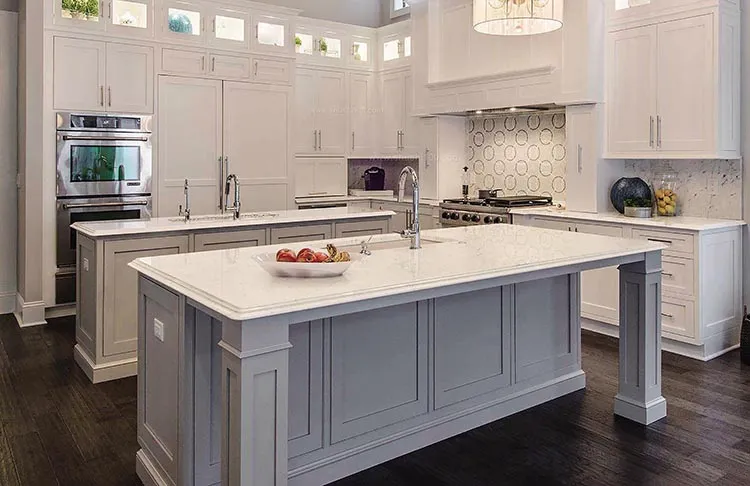
According to the recommendations of manufacturers and architectural design, a 2 cm thick quartz countertop is usually safe to span between 60 cm and 80 cm (about 24 inches to 32 inches) without support.
quartz countertops, as a material with excellent comprehensive performance, are completely suitable for use as countertop materials for kitchen islands. Its high durability, stain resistance and aesthetics make it perform well in multi-functional use scenarios such as food preparation, cooking and dining.
Although real marble is hard, its durability is limited. The main component of calcium carbonate makes it very sensitive to acidic substances (such as lemon juice, vinegar, etc.), and it is prone to chemical reactions leading to corrosion marks on the surface.
High-quality clay tiles can withstand a static weight of about 150-200 kilograms per square meter when laid reasonably. This load-bearing capacity is mainly used to resist natural loads such as snow accumulation and falling branches.
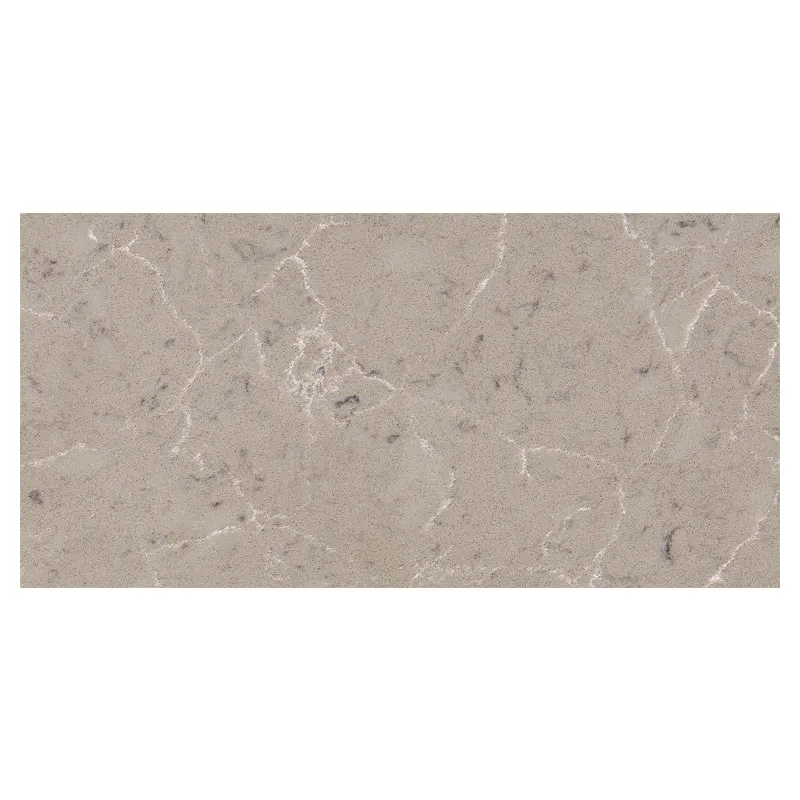
The production process of quartz countertops fully meets the definition of engineered stone. It combines natural quartz with resin through artificial processing, and forms a building material with consistency and stability after pressing and curing.